Are Your Podcast Episode Pages Driving Traffic or Just Sitting There?
Most podcast hosts build landing pages that look nice but fail to convert listeners into subscribers. Here's why your episode pages aren't working—and how to fix it.
Guester Team
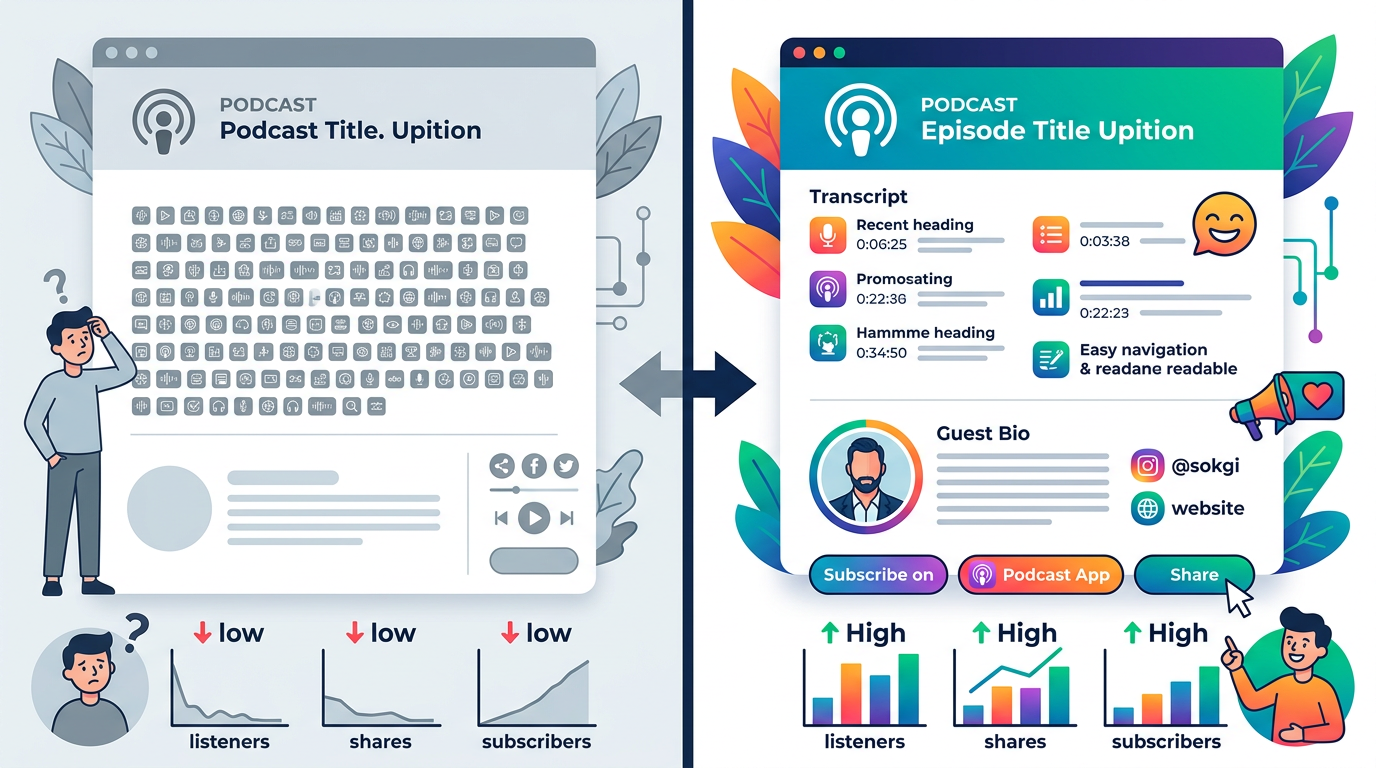
Are Your Podcast Episode Pages Driving Traffic or Just Sitting There?
You spent weeks planning your podcast, recording crisp audio, and uploading episodes to Apple Podcasts and Spotify. You even built a landing page. But when you check your analytics, the numbers tell a depressing story: barely any traffic is hitting your episode pages, and even fewer visitors are clicking "subscribe."
The problem isn't your podcast. It's that your episode landing pages are invisible to the people searching for content like yours—and even when someone does land on your page, they hit a dead end instead of a clear path to become a loyal listener.
You're not alone. Most podcast hosts treat their episode pages as afterthoughts: a place to dump show notes, slap on a play button, and call it done. But a podcast episode landing page is your single biggest opportunity to convert curious browsers into regular subscribers. If it's not built intentionally, you're leaving thousands of potential listeners—and the SEO traffic that comes with them—on the table.
Why Your Podcast Episode Pages Aren't Getting Found (or Clicked)
There are three reasons your episode landing pages aren't performing:
You're optimizing for the platforms (Spotify, Apple Podcasts) instead of optimizing for Google. And even when someone finds your page, you're not giving them a clear reason to subscribe.
First: Your transcripts are trapped in PDFs. This is the most common mistake. You transcribe your episodes (good move) and then upload them as a downloadable PDF (huge miss). Search engines don't index text locked inside PDFs the way they read text on a live webpage. All that SEO value—all those keywords that could have brought organic traffic—vanishes. A visitor lands on your page, sees "Download Transcript," and leaves. No engagement, no indexing, no traffic compounding over time.
Second: Your episode pages lack structure and clear CTAs. You embed a media player, add a brief description, and maybe link to Spotify. But you're not telling visitors why they should care about *this* episode, who it's for, or what action to take next. No guest bio. No social proof. No "subscribe here" button that stands out. Visitors don't know whether to stay or leave.
Third: You're not promoting each episode as a standalone asset. Your episode page should be a hub for that episode—a place where guests can share it, where it ranks in Google for specific keywords, where readers can explore related episodes. Instead, you're treating it like a back-catalog dump. Each episode should have its own dedicated page with its own SEO strategy, its own social sharing hooks, and its own conversion path.
How to Build Podcast Episode Landing Pages That Actually Convert
A high-performing episode page does three things: it ranks in search, it keeps visitors engaged, and it converts them into subscribers. Here's how to make that happen:
Publish Your Transcript Directly on the Page
Not as a PDF download. Format your transcript like a blog post, broken up with speaker labels, timestamps, and natural paragraph breaks. Search engines will index every word, which means you're capturing organic traffic for long-tail keywords buried in your episode. This also makes your content accessible to deaf and hard-of-hearing listeners—a win for inclusion and SEO. Tools like Otter.ai or Rev can transcribe your episodes; then paste the text directly into your page builder.
Feature a Compelling Episode Description and Guest Bio
Your episode description should answer: What is this episode about? Who should listen? What will they learn? This is your elevator pitch. Keep it to 2-3 sentences, but make every word count. Below that, include a bio for each guest or speaker. Link to their website or social profiles so visitors can learn more and follow them. This creates social proof (real experts were here) and gives visitors another conversion path beyond just subscribing to your show.
Add a High-Quality Embedded Media Player at the Top
Visitors should be able to listen in one click, without leaving the page. No forcing them to navigate to Spotify or Apple Podcasts. The media player is your hook; use it. Platforms like Transistor, Anchor, or Buzzsprout have beautiful embedded players built in. Make sure the player is mobile-responsive because most of your listeners will be on phones.
Create Dedicated CTAs for Subscribing
Don't assume visitors will hunt for a subscribe button. Make it obvious. Include listen-on badges for Apple Podcasts, Spotify, Google Podcasts, and other major platforms. Add a "Subscribe" button above the fold. If you're using a tool like Guester, you can automatically generate guest-specific episode pages with built-in subscription links, making it easy for guests to promote the episode to their own audiences while driving traffic back to your show.
Use High-Quality Cover Art and Visuals
Your podcast cover art should stand out. Don't use blurry images or cluttered designs. Each episode can have a custom social card (a visual graphic highlighting the episode topic and guest name). These cards get shared on Twitter, LinkedIn, and other social platforms, driving traffic back to your episode page. Tools like Canva make this easy even if you're not a designer.
Include Show Notes and Related Links
List every resource, tool, and link mentioned in the episode. Format these as a bulleted list with brief descriptions. This gives visitors a reason to stay on your page (they're looking for resources) and it boosts SEO because you're adding more relevant keywords and context. Link to related episodes so visitors can explore your catalog.
Make Your Guest Promotion Strategy Part of Your Page Design
If you feature guests on your podcast, your episode page should make it easy for them to promote the episode. Most guests want to share their appearance, but only if the episode page gives them something worth sharing. That means:
- A prominent guest bio section with a link to their website or social profiles
- Social media share buttons positioned throughout the page
- A pre-written social caption they can copy and paste
- An embeddable player or link they can share in their newsletter
When guests promote your episode, they're bringing their audience to your page. That's organic traffic and new subscribers without you spending a dime on ads. But it only works if the page makes sharing frictionless.
A podcast episode landing page should work as hard for your guests as it works for you. The easier it is for them to share, the more traffic flows back to your show.
Keep Your Episode Pages Fresh and SEO-Friendly
After you publish, your job isn't done. Update your episode pages regularly with new show notes, related episodes, or listener feedback. An outdated page signals to search engines and visitors that your podcast is inactive. Stale content gets buried in search results.
Also apply basic SEO best practices to each page:
- Include your target keyword naturally in the title and first paragraph
- Write a compelling meta description (under 160 characters) that includes the episode topic
- Use H2 and H3 headings to break up the transcript and show notes
- Add alt text to images so search engines understand what they depict
- Link to related episodes within your show to increase internal linking
- Embed or link to your podcast cover art and episode artwork
- Make sure the page loads fast (especially mobile) because speed is a ranking factor
Over time, these episode pages compound. One month, you get 50 organic visitors to one episode. Six months later, you have 50 episodes ranking in Google, each bringing 50+ visitors per month. That's hundreds of new potential subscribers every month—traffic you own, not traffic you have to pay for or beg platforms to show you.
Automate Your Episode Page Strategy
Building individual episode pages for every episode is time-intensive. You have to set up the page, format the transcript, add the guest bio, create social cards, and set up CTAs. If you're publishing weekly, that's hours per month spent on page setup instead of content creation.
Tools like Guester automate much of this workflow. You can generate dedicated episode pages with guest bios, embedded media players, transcripts, subscription links, and built-in social sharing—all in minutes instead of hours. Your guests get a professional page to share, your episode gets optimized for search, and you reclaim time to focus on the next episode.
Hosts who invest in optimized episode pages see 30-50% increases in newsletter signups, 60%+ increases in listener retention, and steady organic traffic growth. Your episode pages become evergreen assets that keep working for you months and years after they publish.
Your Episode Pages Should Be Your Conversion Engine
Stop treating your episode landing pages as a necessary evil. They're your most powerful conversion tool. They rank in Google when done right. They make guests want to promote your show. They give visitors a reason to subscribe and stay engaged.
Start with your next episode: publish the transcript on-page (not as a PDF), write a compelling description, add a guest bio, embed a media player, and create clear CTAs. Watch what happens to your traffic and subscriber growth over the next 30 days.
If you want to scale this without the manual busywork, tools built for podcasters can help. The goal is the same: make every episode page work as hard as you do.